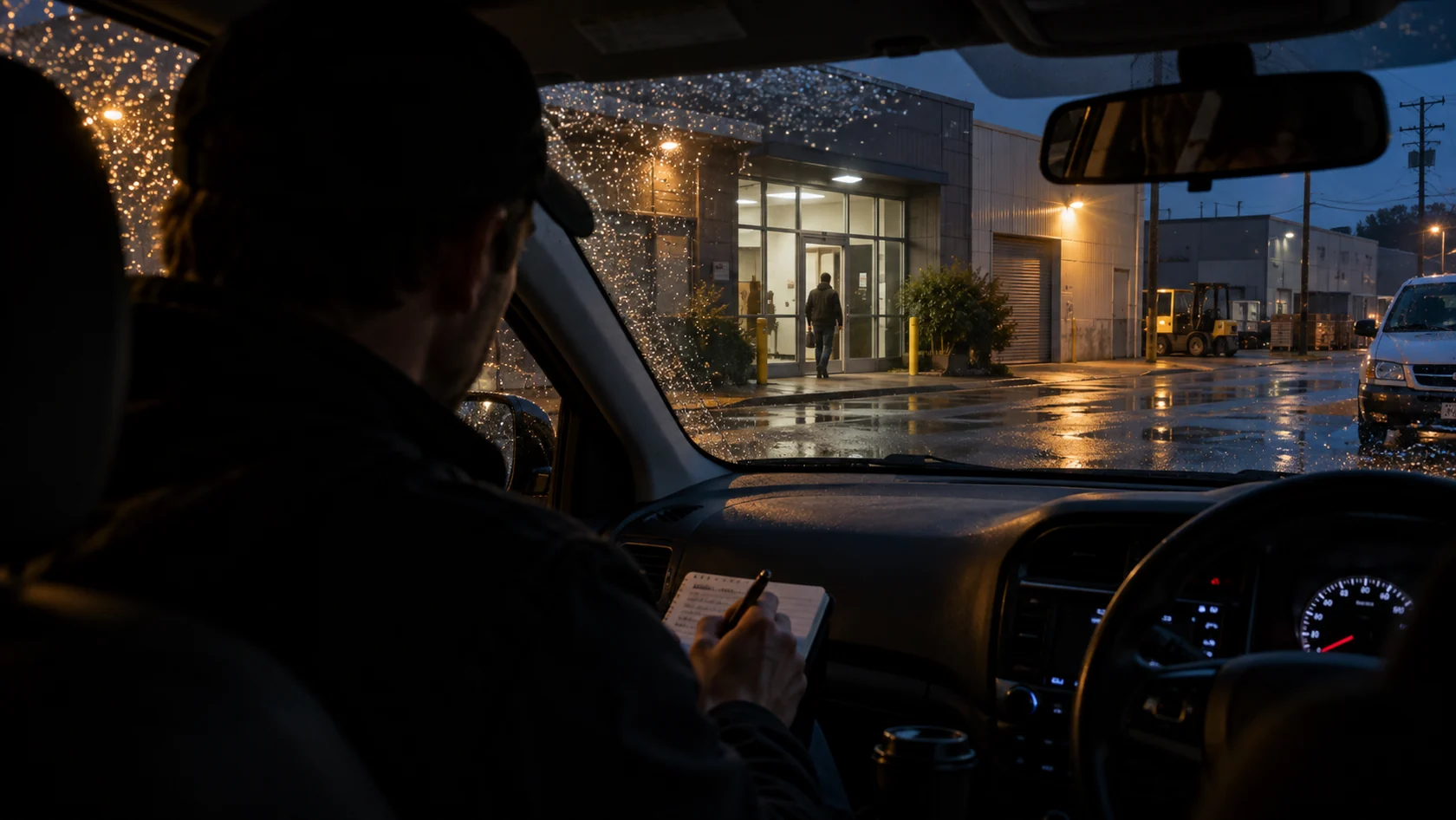
Proportionate mobile or static observation
Select static or mobile observation based on the question, permitted locations and safety assessment.
Targeted, lawful observation of relevant activity, with time records, original media and a clear account of observation gaps.
Surveillance is useful only when it is directed at a legitimate question and conducted within clear legal and ethical limits. We define the relevant activity, observation windows, locations and reporting standard before deployment.
Methods are selected only after purpose, legality, proportionality and evidentiary requirements have been assessed.
Select static or mobile observation based on the question, permitted locations and safety assessment.
Keep contemporaneous notes identifying the times covered, interruptions and what the observer actually saw.
Capture relevant activity only where lawful, keeping original files and noting visibility or identification limits.
Compare notes and media, resolve timing discrepancies and make gaps explicit in the final chronology.
Final deliverables depend on the agreed scope and what can lawfully and reliably be established.
Logs recording start and finish times, movements observed and interruptions.
A schedule linking each relevant image or clip to its date and observation entry.
A combined account of the observed activity across the agreed periods.
A short explanation of what was verified, what was not seen and what remains uncertain.
Set a measurable question, such as whether a particular activity occurs at an agreed place and time. Explain the lawful purpose and any relevant orders or safety concerns. Agree the number of observation periods, travel assumptions and reporting needs before deployment.
Activity can change unexpectedly, and observation may produce no relevant result. Ask about cancellation, extensions, extra personnel and the treatment of periods when the subject cannot be observed. No report should imply continuous monitoring where only a limited period was covered.