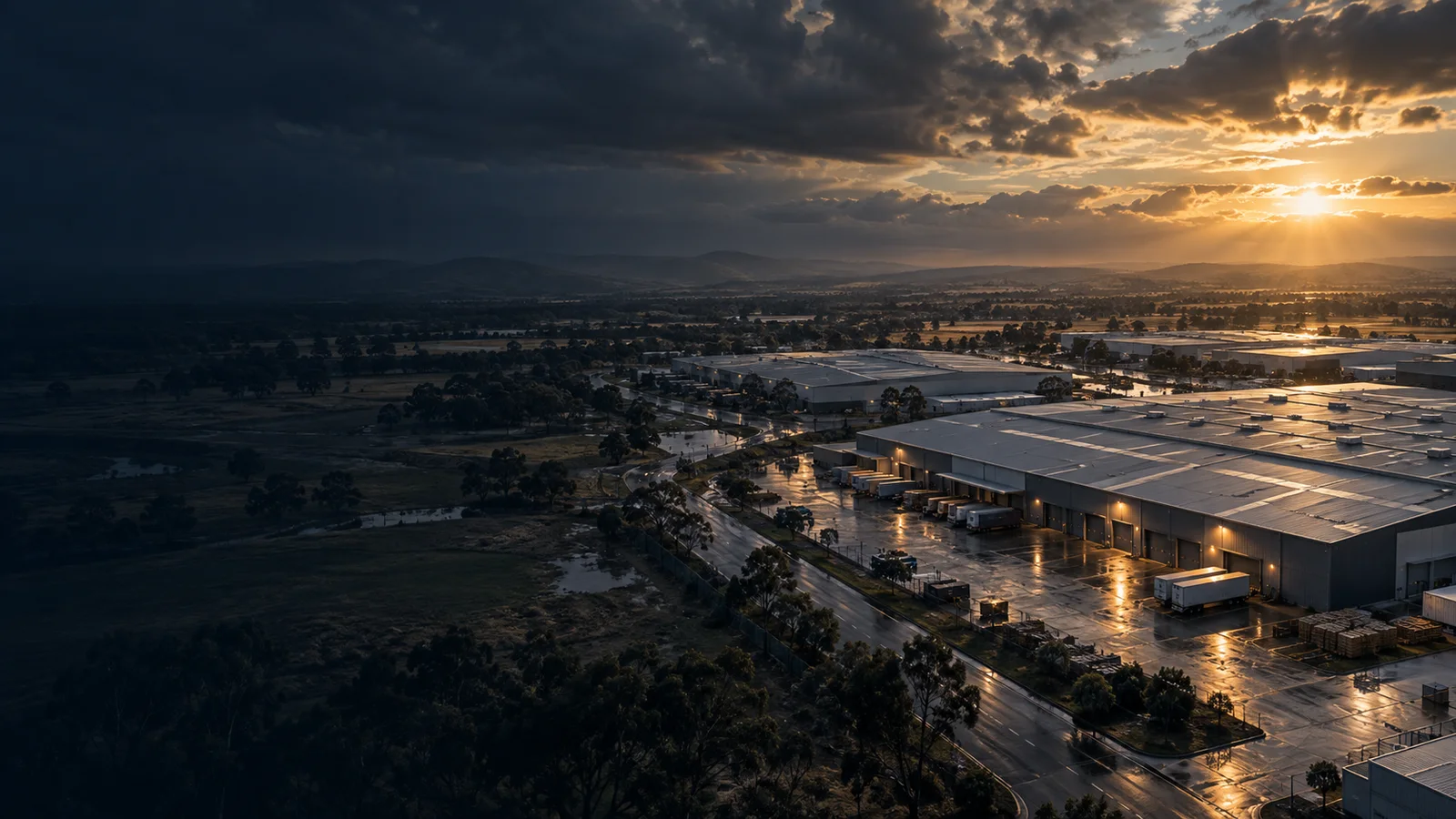
Illustrative case study. The events below are hypothetical and explain a possible investigation approach. They do not describe a verified client engagement or a claimed result.
The situation: competing accounts after a weather event
Consider a regional commercial property where a severe weather event is followed by a substantial claim. The policyholder describes recent roof and water damage. Earlier maintenance photographs exist, but their coverage and dates vary. The assessor needs to understand what was visible after the event and how it compares with the earlier record.
The investigation question is not whether an image looks dramatic. It is whether specific conditions can be documented, located and placed in time. Aerial and ground records can help a claims team understand a large site, but the interpretation of damage may also require engineering, building or other specialist expertise.
Plan the site record around the disputed issues
Before attending, the commissioning team would identify the buildings, damage items and comparison dates that matter. A site plan, claim schedule and available earlier images help direct the capture. Access, weather, hazards and any aerial operating requirements need to be addressed before work begins.
The capture plan should include an overview of the property, roof and drainage context, detailed ground views and consistent location references. Where it is safe and authorised, repeating an earlier viewpoint makes comparison more useful. Areas that cannot be accessed or observed must be marked as gaps.
Collect records that can be compared
Original image files, capture dates and the relationship between wide and detailed views should be preserved. A photograph of an isolated defect is more useful when the reviewer can also see which structure it belongs to and where it sits on the site.
- Identify each photographed area on a site map or building schedule.
- Retain originals and use separately identified copies for annotations.
- Record whether an earlier image date is verified or supplied by another party.
- Document inaccessible areas and any temporary repairs already undertaken.
- Keep witness observations separate from technical explanations of cause.
A worked comparison set
Hypothetical records. A warehouse has three roof bays, A to C. The insured supplies photographs said to be from a 4 February maintenance visit, while a site attendance on 13 March follows a storm reported on 12 March. The February set covers bays A and B from the yard but not bay C; the March set includes a drone overview and close ground views of water staining beneath C. The comparison schedule should identify each bay, image filename, photographer or provider, verified versus asserted date, viewpoint and obstruction. It should not present a February view of A as a “before” image for C.
Preserve the original February files as received and record how the insured supplied them. If only compressed messaging copies are available, state that limitation and seek the original device files if feasible. For the March capture, retain the camera originals, site map, flight or access notes where relevant and separate marked-up copies. The photographic-evidence guide explains the record needed when images move between people or are edited for a report.
Build a chronology without overstating it
Maintenance records, repair invoices, inspection notes and witness accounts may help explain the sequence. Someone who inspected the property immediately after the event has different knowledge from someone who first saw it after repairs began. Interview notes should preserve that distinction.
For example, a post-event image may show displaced roofing while an earlier view does not cover the same section. That comparison supports a description of the later condition; it does not automatically prove when the displacement occurred. The missing earlier coverage is a material limitation, not a detail to omit.
Testing cause without pretending the pictures answer it
Suppose the roof maintenance log records a leak at bay B in January but no inspection of bay C. A repair invoice dated 15 March describes temporary sheeting at C. The March image supports the observation that sheeting and staining were visible when photographed. It does not establish whether wind, earlier deterioration or repairs caused the underlying failure. The investigator would ask the site contact which areas were inspected immediately after the storm, compare contemporaneous notes with later recollections, and refer mechanism and timing questions to an appropriately qualified building or engineering expert.
Illustrative outcome. The claims team could receive a mapped condition schedule: “C: staining visible on 13 March; no comparable pre-event image located; temporary sheeting recorded on 15 March; cause unresolved.” That is useful even though it does not decide policy coverage. It prevents a visually persuasive but unsupported before-and-after claim from becoming the basis of the decision.
What the claims team could receive
A useful file would include a dated media register, mapped photograph locations, a condition schedule and side-by-side comparisons where viewpoints genuinely align. Each comparison should say what is visible, what is obscured and what cannot be determined from the records.
The written account would distinguish observed damage from reported events and specialist opinions. It could identify questions for an engineer, such as whether a visible failure pattern is consistent with a particular mechanism. This gives the assessor a clear route to further work rather than presenting imagery as a complete answer.
What this example demonstrates
Visual documentation can organise a large, disputed loss into reviewable items. It does not itself determine causation, repair value or policy coverage. Those assessments remain with the claims decision-maker and relevant experts. The practical value is a traceable record that makes the scope and uncertainty of the evidence easier to understand.
Related practice: visual evidence documentation and insurance and claims investigations.